The Journal — SBK PlumbingServing New York — 24 / 7
Chapter 01
The article.
6 min read
When your boiler starts acting up, the big question is whether to repair or replace it. A repair is cheaper today, but if the boiler is old and unreliable, you might just be delaying the inevitable and paying for it twice. Replace too soon, though, and you spend money you didn't have to. So how do you decide whether to repair or replace your boiler? It comes down to a few key factors: the age of the unit, how often it breaks down, and how efficiently it runs. In this guide, we'll walk through the signs that point to a repair, the signs that point to a replacement, and how to weigh cost against efficiency. If you're facing this choice in New York, a little clarity now can save you a lot of money and cold nights later. Let's break the decision down step by step so you can choose with confidence and avoid overpaying.
§ 01
Signs yourboiler canbe repaired.
Not every boiler problem means it's time for a new unit. If your boiler is relatively young, generally under 10 to 12 years old, and this is its first real issue, a repair usually makes sense. One-off faults like a worn valve, a faulty thermostat, or a stuck pump are common and fixable. If the boiler still heats well most of the time and hasn't been a repeat troublemaker, a straightforward repair can give you many more years of reliable heat. The cost of the repair also matters. If it's a small fraction of what a new boiler would cost and the unit is otherwise in good shape, fixing it is the smart, budget-friendly choice.
§ 02
Signs it'stime to replaceyour boiler.
Certain signs point clearly toward replacement. Age is the biggest one: most boilers last around 15 years, and past that, breakdowns become more likely and parts get harder to find. If your boiler needs frequent repairs, each one is money spent on a unit that's on its way out. Rising heating bills without a change in usage often mean the boiler is losing efficiency. Uneven heat, cold radiators, strange noises, and constant resets are other red flags. If you're facing a major repair on an old boiler, or several repairs in a short time, replacement usually makes more financial sense. A new, efficient boiler brings reliable heat and lower running costs you can count on.
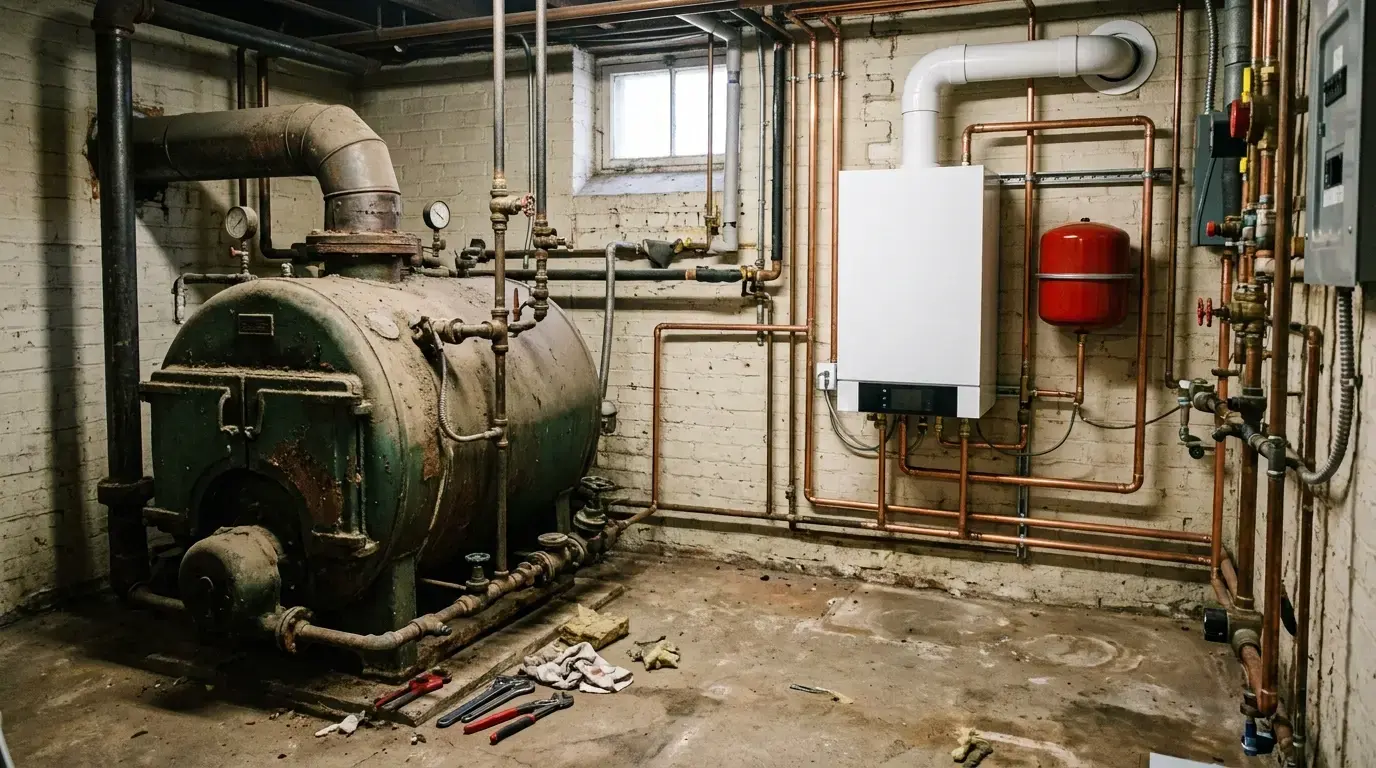
Fig. 01An SBK technician assessing an older boiler in a New York home — age, cost, and efficiency point you to the right answer.§ 03
The costvs efficiencytrade-off.
The repair-or-replace decision often comes down to math. A single repair is cheaper than a new boiler, no question. But repeated repairs on an aging unit add up fast, and you're still left with an old, inefficient system. Newer high-efficiency boilers use less fuel to heat your home, which can meaningfully lower your monthly bills. Over a few years, those savings can offset a chunk of the replacement cost. So the real question isn't just today's repair bill, it's what you'll spend over the next several winters. If you're pouring money into an old boiler that still costs more to run, replacement can be the cheaper choice in the long run, even if it costs more up front.
§ 04
How to makethe rightcall in New York.
The best way to decide is to get an honest, professional opinion. A technician can inspect your boiler, tell you what's really wrong, and give you a clear picture of its age, condition, and efficiency. From there, you can compare the cost of the repair against the value of a replacement, without guessing. At SBK Plumbing, we inspect boilers across New York and lay out your options plainly, with a free estimate and no pressure. We'll never push a replacement you don't need, and we'll be straight with you if a repair is throwing good money after bad. Either way, you'll have the facts to make the right call for your home and your budget.
Chapter 02
Frequently asked questions.
5 answers
01How do I know if I should repair or replace my boiler?
Age, repair frequency, and efficiency are the big factors. A boiler over 15 years old with frequent breakdowns is usually worth replacing.
02How long do boilers last?
Most boilers last around 15 years, sometimes longer with regular service. After that, replacement often makes more sense than repairs.
03Will a new boiler save money?
Often, yes. Newer high-efficiency boilers use less fuel, which can lower your heating bills compared to an old, worn unit.
04Is it worth repairing an old boiler?
Sometimes, for a minor fix. But repeated repairs on an old boiler add up fast, and replacement may be the smarter long-term choice.
05Can SBK help me decide in New York?
Yes. We inspect boilers across New York, explain your options, and give a free estimate so you can make the right call.
Chapter 03Boiler adviceNew York / 24 / 7
Repairor replace?
Get honest boiler advice from SBK Plumbing in New York. Free estimates, no pressure, and clear options so you know before you commit.